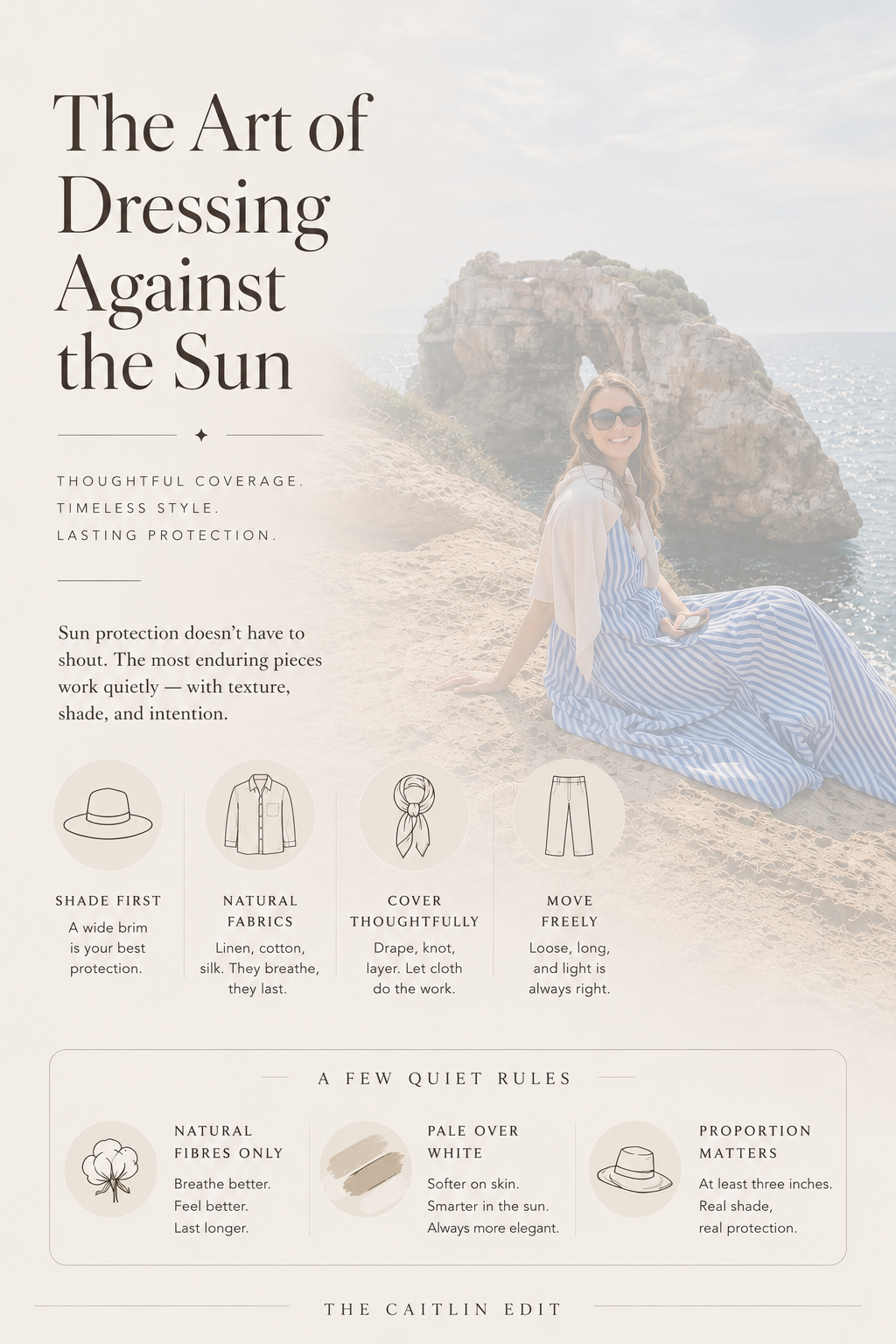
The Art of Dressing Against the Sun
On the quiet discipline of protecting your skin with texture,
shade, and restraint — no SPF-printed rashguard required.
There is a particular kind of summer aesthetic that does not involve 50 SPF or athletic fabrics in neon. We’re talking a linen coat worn over bare shoulders, or a brimmed hat that requires both hands to keep in a sea breeze. A scarf knotted at the neck a la vintage Riviera photograph.
Sun protection, done well, is simply considered dressing. It is slowing down and choosing with intention to let cloth do what sunscreen cannot.
The Wide‑Brimmed Hat
The single most effective item in any summer wardrobe. Natural straw, woven palm, or a structured panama block the face, décolletage, and shoulders simultaneously. The bigger the better .
The Linen Overshirt
Worn open over a slip dress or closed against wind, a fine linen shirt in ecru or warm white breathes without trapping heat. The weight adds a layer of protection as well as style.
The Silk or Modal Scarf
Draped across the shoulders, knotted at the throat, or pulled over the hair. A scarf is the most adaptable piece of cloth in the wardrobe that adds bonus points for being chic.
The Loose Trouser
Wide-leg linen or cotton trousers cover the most sun-exposed limb while creating an ease of movement that shorts cannot rival. They age well in the wash and are always in style.
Forget modesty, this is about looking after yourself over time. The people with the best skin at sixty made quiet decisions at thirty like a hat here, a linen layer there, nothing dramatic. Beyond protection, those layers actually work with your body. Fine fabric in full sun keeps you cooler than bare skin.
Principles of
Considered Dressing
Linen, cotton, silk, and fine wool breathe. Synthetics trap heat against the skin in ways that make shade pointless. The investment in natural fabric is also, simply, an investment in comfort.
True white reflects glare upward into the face. Ecru, oat, sandstone, and very pale sage absorb slightly without heating — and they age gracefully, unlike optical whites that yellow within a season.
A hat must have a brim wide enough to cast actual shadow, at minimum three inches. A hat worn for aesthetics alone does the face no favours. Choose function, and the aesthetics will follow.
None of this replaces sunscreen but it does mean you're not relying on it alone. The hat, the layers, the considered fabric is where the additional protection happens. By the time you uncap the SPF, you've already done the work.