Your Skin on Vacation Part I
The first in a three-part series on travel skincare covering preparations to arrival.
Most skin problems on vacation don't start at the destination. They start the week before, in the airport, or at 35,000 feet. The good news is they're almost entirely preventable with a little intention before you even pack your bag.
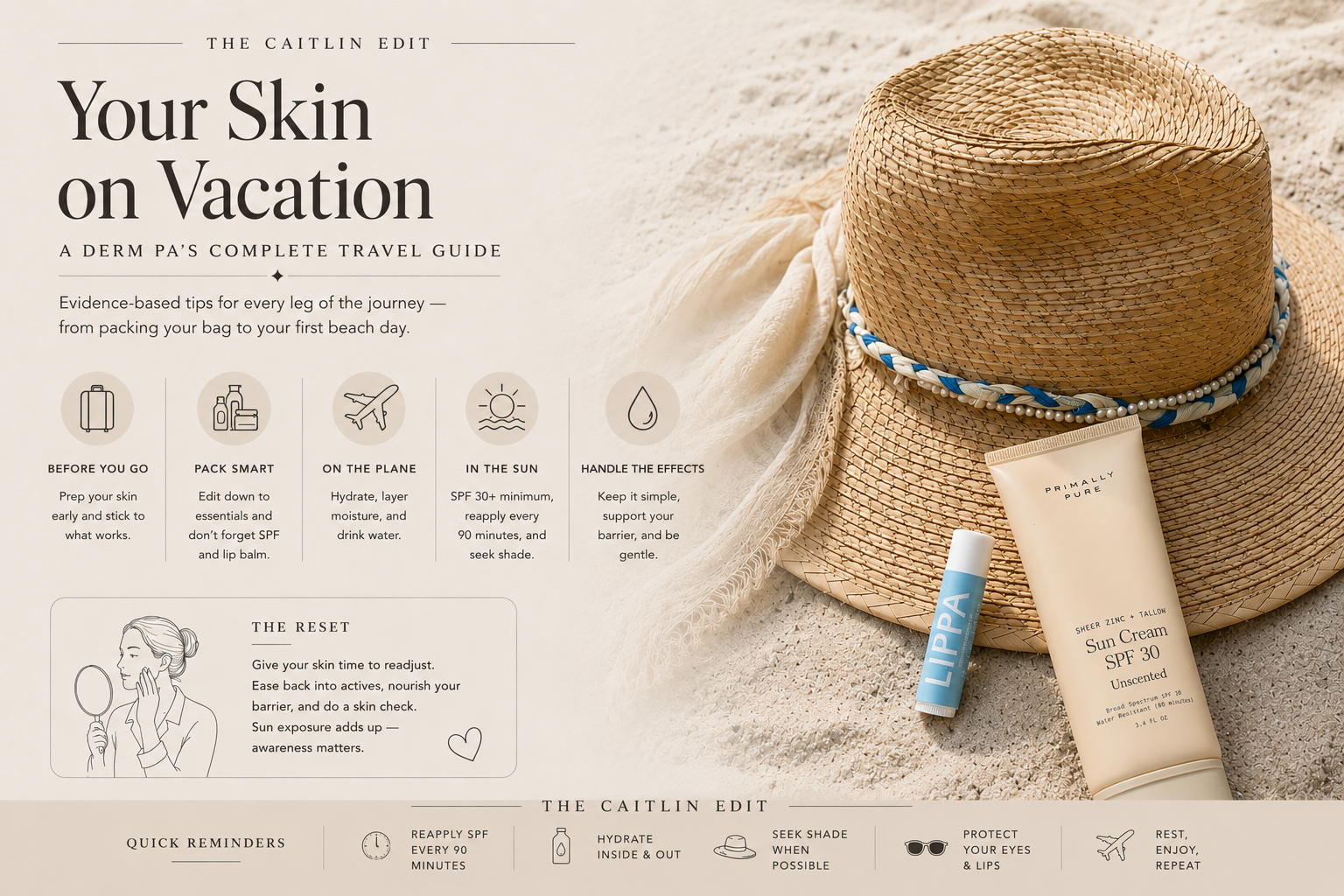
The Week Before: What Not to Do
The most common travel skin mistake happens before the trip even starts by introducing something new.
New retinoid. New exfoliant. New vitamin C serum. All of them can cause purging, irritation, or heightened sensitivity that lands right in the middle of your trip. Your skin needs at minimum two weeks to acclimate to a new active, and that's under stable conditions not changing climates, humidity, and water.
The rule: if you haven't been using it for at least two weeks, it doesn't come on the trip.
The same logic applies to professional treatments. Facials, chemical peels, lasers, and microneedling all increase photosensitivity and temporarily compromise the barrier. Schedule them at least two weeks before travel, more if you'll be in strong sun. Freshly treated skin and a beach vacation are not compatible.
What you should be doing in the week before: consistent SPF, consistent hydration, nothing new. Go into the trip with a calm, well-supported barrier and your skin will handle what comes next far better.
Packing:
The Edit-Down Approach
More products in your bag means more variables, more chances for reactions, and more decisions you don't need to be making poolside. The goal is a short, reliable list of things your skin already knows.
The carry-on edit
Everything your skin needs. Nothing it doesn't.
The non-negotiables
Worth the space
A few things worth noting on the list:
Prescription topicals should never be checked. If your bag is lost, you're without medication. They come in your carry-on, full stop.
On decanting: Thick creams and balms travel well in mini containers. Water-based serums can be more sensitive to temperature shifts. If you're checking a bag, keep them in your personal item or wrap them well.
The healing ointment earns its place. Aquaphor or a similar ointment covers windburn, chapped lips, minor irritation from sun or salt air, and acts as an overnight barrier repair treatment. It's one of the most useful things in a travel bag and takes up little space.
On the Plane:
What's Actually Happening to Your Skin
Cabin humidity sits around 10–20%. For context, a comfortable indoor environment is closer to 40–60%. You're in a moving dehydration chamber for hours, and your skin responds accordingly.
Your skin on a flight
Cabin humidity: ~15%. Your skin notices.
Cleanse, layer, seal
Clean skin, hyaluronic acid serum, then moisturizer on top. Layer now — you'll lose moisture for hours. Skip foundation.
Start drinking water
Don't wait until you're airborne. Hydration from the inside starts before takeoff.
Reapply moisturizer, skip the plain mist
Plain water mists evaporate and pull moisture with them. Use a glycerin-based mist or reapply moisturizer directly.
Light cleanse, fresh moisture, nothing more
Your skin is recalibrating alongside the rest of you. No actives tonight. Let it settle first.
A few things the timeline doesn't fully capture:
Layering matters more than quantity. A hyaluronic acid serum followed by a moisturizer outperforms either one alone. HA draws water to the skin; the moisturizer seals it. One product trying to do both jobs usually does neither as well.
On facial mists: a plain water mist seems intuitive but can backfire — as it evaporates off the skin, it takes moisture with it. If you want to mist mid-flight, use one with glycerin or aloe in the formula. Otherwise, skip it and reapply moisturizer instead.
Skip the full face of makeup on long flights. Foundation sits on top of skin and compounds the dehydrating effect of cabin air. A tinted SPF or bare skin with good skincare underneath will look better when you land and your skin will thank you.
Drink water. This one is obvious and we all still forget. The skin is an organ. It responds to systemic hydration the same way everything else does.
On Landing: The Gentle Reset
You've arrived. Resist the urge to immediately resume your full routine.
A light cleanse and a fresh layer of moisturizer is the right move. If you've crossed time zones, your skin's circadian rhythm is adjusting alongside the rest of you. This is not the night for retinol or a new exfoliant.
Give it 24 hours to settle. Then ease back in.
Part II: At the Destination + Coming Home: sun protection, beach days, and how to reset when you're back.
All content is for educational purposes only and does not constitute medical advice or initiate a patient-provider relationship.
