Your Skin Barrier
What It Is, and When It's Crying for Help
You've probably heard the term "skin barrier" a lot lately. But what does it actually mean and how do you know when yours is in trouble? Here's what you need to know, without the jargon.
What is the skin barrier, exactly?
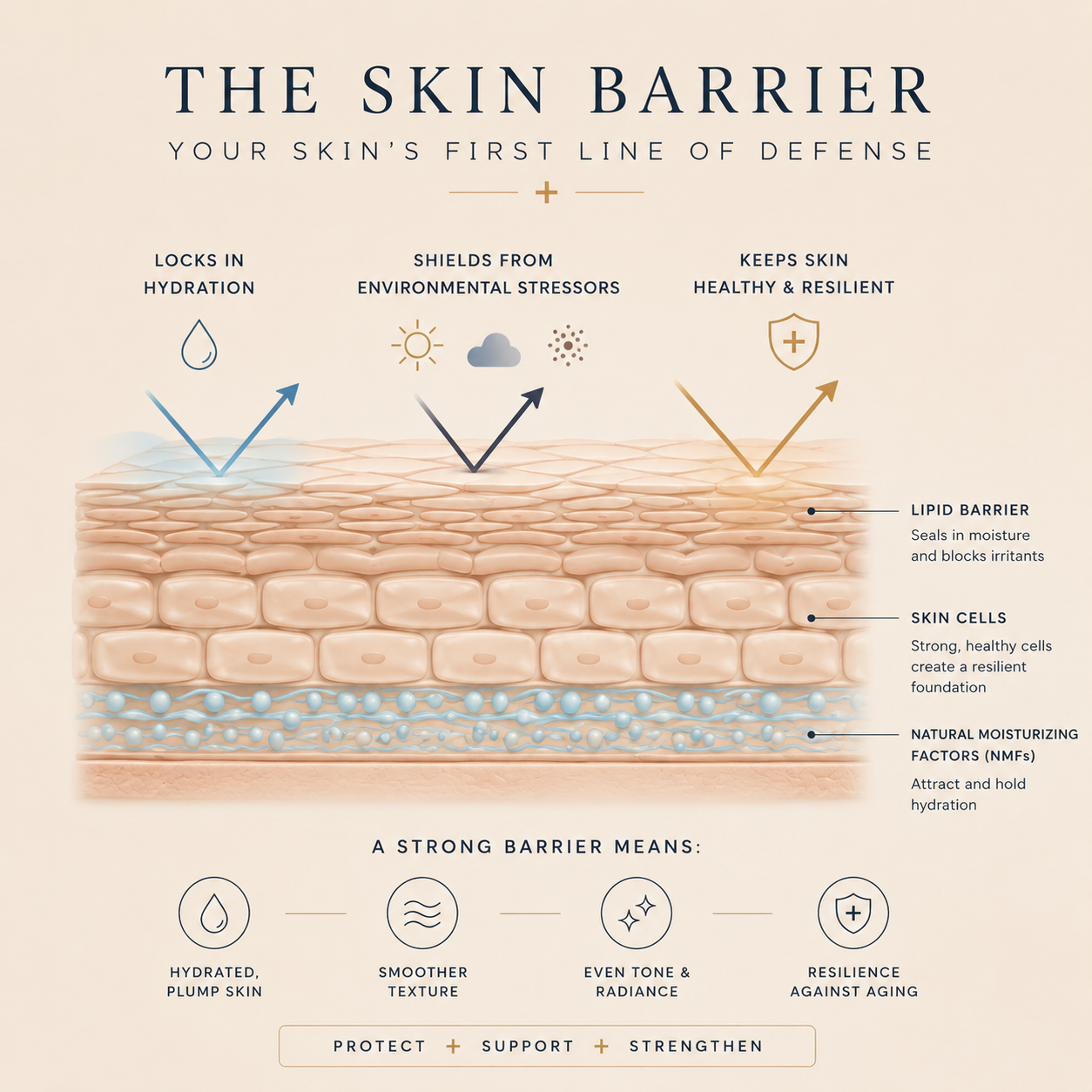
Think of your skin barrier as a brick wall. The bricks are your skin cells or coneocytes and the mortar holding them together is a carefully balanced mix of lipids: ceramides, cholesterol, and fatty acids. Together, they form the outermost layer of your skin, called the stratum corneum.
This wall has one primary job: keep the good stuff in and the bad stuff out. On the "in" side, that means water. Your skin needs to stay hydrated to function, heal, and look healthy. On the "out" side, it means environmental aggressors like pollution, bacteria, allergens, UV damage, and harsh ingredients that would otherwise penetrate and cause harm.
When the barrier is intact and working properly, your skin holds moisture efficiently, stays calm, and can repair itself after daily wear and tear. When it's not, when those lipids are depleted and the mortar starts crumbling.
The skin barrier isn't just a surface concern. It's the foundation everything else is built on. No amount of serum or treatment works as well on a compromised barrier as it does on a healthy one.
The barrier can be damaged by a surprising number of things: over-cleansing, harsh actives used too aggressively, environmental dryness, stress, aging, hormonal shifts, and even genetics. It's one of the most commonly overlooked contributors to skin problems and one of the most important things to address first.
Signs your barrier is compromised
A damaged barrier doesn't always announce itself with obvious peeling or redness. Sometimes the signs are more subtle and often get mistaken for other skin concerns entirely.
Here's what to look for.
Tightness after cleansing
If your skin feels tight, dry, or "stripped" within minutes of washing, that's your barrier struggling to retain moisture.
Stinging or burning
Products that used to feel fine, sometimes even water, suddenly sting. A compromised barrier means nerve endings are more exposed.
Persistent redness or flushing
Low-grade inflammation becomes chronic when the barrier can't keep irritants out. Skin looks perpetually reactive or blotchy.
Sudden product sensitivity
You've used the same routine for months, and now everything irritates you. The barrier shifted not the products.
Rough, uneven texture
Dry patches, flakiness, or a rough feel that doesn't respond to moisturizer is often a barrier issue rather than simple dehydration.
Skin that never feels "settled"
If your skin fluctuates wildly day to day being oily in some areas, parched in others, your barrier may be struggling to regulate itself.
One of the most common patterns I see is someone who has been diligent with their actives (retinol and vitamin C) and their skin suddenly starts reacting to everything. The assumption is that a product caused the problem. More often, the barrier was gradually worn down, and the tipping point just happened to coincide with a product use.
If you're experiencing several of these signs at once, barrier repair should come before anything else on your skincare agenda — including anti-aging treatments. Trying to address fine lines or pigmentation on a broken barrier is like painting a wall that hasn't been primed.
The good news: the barrier is remarkably resilient. With the right support like gentle cleansing, ceramide-rich hydration, and a temporary pause on aggressive actives, most people see meaningful improvement within two to four weeks.
