After the Burn:
A Complete Guide to
Sunburn Recovery
Evidence-based strategies - conventional, nutritional, and integrative - to calm inflammation, restore your skin barrier, and prevent long-term damage.
Sunburn isn't just surface-level discomfort. It's an acute inflammatory response - one your skin, immune system, and antioxidant defenses are working overtime to resolve. The good news: the right care in the hours and days after sun exposure can meaningfully change the trajectory of healing.
Whether you caught a little too much sun on the beach or are dealing with a more significant burn, the following guide walks through what's actually happening in your skin and what the evidence supports for recovery - from immediate first aid to integrative nutritional support.
🔬 SECTION 01
What's Actually Happening in Your Skin
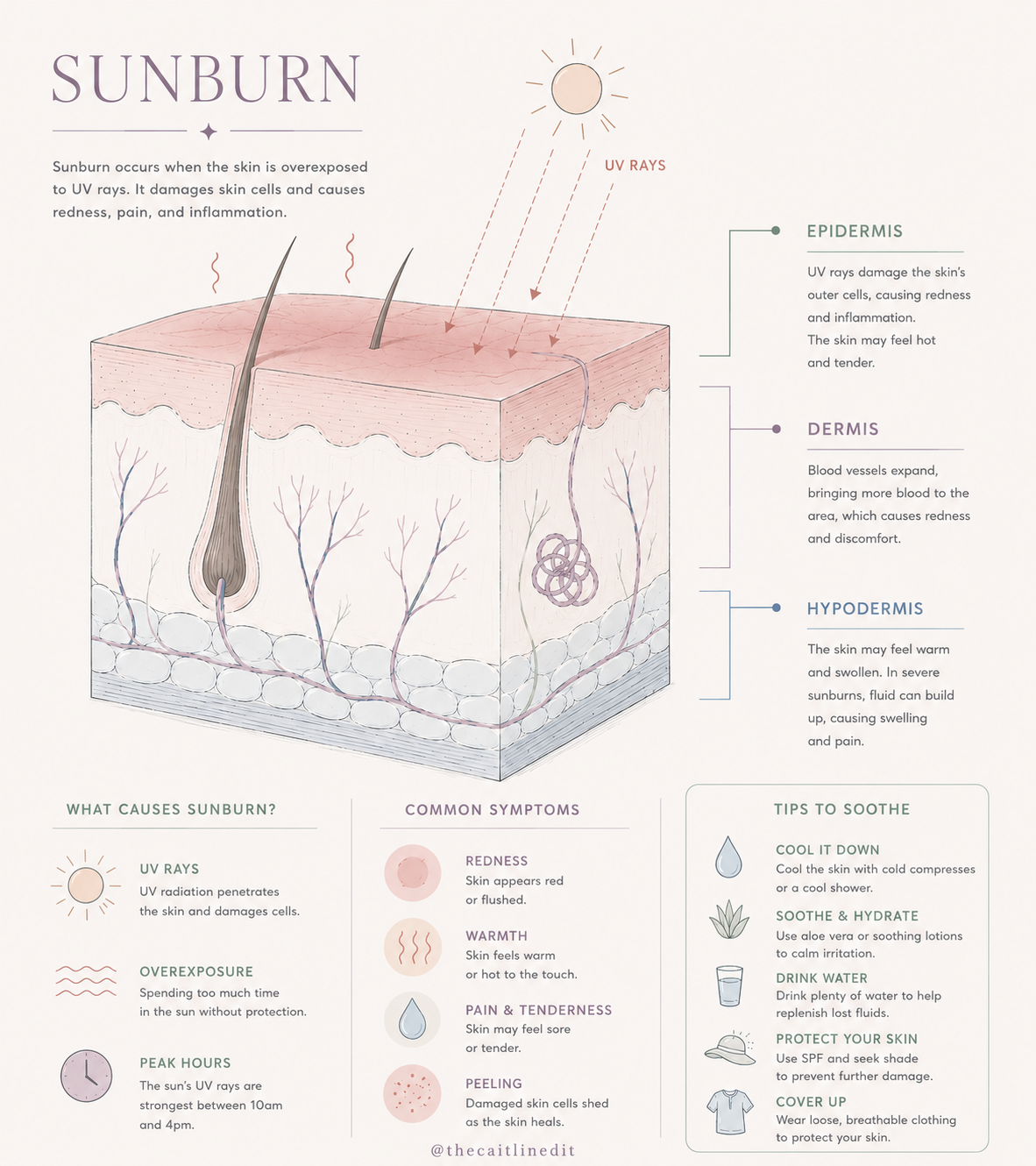
UV radiation, primarily UVB, penetrates the epidermis and directly damages DNA in skin cells. Your immune system mounts an inflammatory cascade: vasodilation causing redness and heat, fluid accumulation (swelling), and the release of prostaglandins and cytokines that drive pain. The characteristic redness of sunburn typically peaks 12–24 hours after exposure.
More significantly, UVA radiation - which penetrates deeper - generates reactive oxygen species (ROS) that damage cell membranes, proteins, and mitochondria throughout the dermis. This oxidative stress is a major driver of both the visible burn and longer-term effects like photoaging and DNA mutation.
The peeling that occurs days later is your body initiating apoptosis or programmed cell death of damaged keratinocytes. This is actually a protective mechanism to remove cells with potentially mutated DNA.
🧊 SECTION 02
Immediate Care: The First 24 Hours
The window immediately after sunburn is critical for limiting the inflammatory cascade.
Seek shade and cover exposed skin
UV exposure continues to cause damage even after initial burning begins. Move indoors or to full shade immediately and stay out of the sun until healing is complete.
Cool (not cold) compresses or a lukewarm shower
Cool water helps reduce surface temperature and soothes inflammation without the vasoconstriction of ice, which can impede circulation. Avoid hot showers, which worsen vasodilation. Pat skin dry gently - never rub.
Water, electrolytes, and anti-inflammatory fluids
Sunburned skin draws fluid to the surface, contributing to systemic dehydration. Increase water intake significantly. Coconut water or electrolyte beverages support fluid balance. Green tea (cooled) delivers catechins with anti-inflammatory and antioxidant activity.
NSAIDs taken early can limit the inflammatory cascade
Ibuprofen (and other NSAIDs) inhibit prostaglandin synthesis - the key mediator of sunburn pain, redness, and swelling. Evidence supports their use within the first few hours of exposure to meaningfully reduce severity. Aspirin works similarly. Follow dosing guidelines and avoid if contraindicated.
⛔ What to Avoid Immediately
- Ice or ice packs directly on skin - can cause cold injury to already compromised tissue
- Butter, oils, or thick occlusives on fresh burns - trap heat and increase infection risk
- Exfoliating cleansers, retinoids, AHAs, or any active skincare products
- "Topping up" a tan - further UV exposure significantly worsens damage
- Breaking blisters - increases infection risk and slows healing
- Alcohol consumption - worsens dehydration and impairs immune response
🌿 SECTION 03
Topical Support: Evidence-Based Options
Choosing the right topicals can make a meaningful difference - but ingredient quality and formulation matter as much as the ingredient itself.
Aloe Vera Gel
A well-established first-line topical for sunburn. Aloe contains aloin, aloesin, and acemannan, which have documented anti-inflammatory, analgesic, and wound-healing properties. Look for products with 98%+ pure aloe - many commercial gels are mostly water with fragrance.
Moderate evidenceCeramide-Rich Moisturizers
UV radiation disrupts the skin's lipid barrier. Ceramide-containing emollients (look for ceramide NP, AP, EOP) help restore barrier function, reduce transepidermal water loss, and support the healing environment. Apply liberally to damp skin after heat has dissipated.
Strong evidenceColloidal Oatmeal
FDA-recognized as a skin protectant. Beta-glucans and avenanthramides in colloidal oatmeal reduce itching and inflammation. Particularly helpful for the dry, tight phase of healing. Soothing oat baths can address large affected areas.
Strong evidenceNiacinamide (Vitamin B3)
Topical niacinamide supports barrier repair, reduces erythema, and has demonstrated photoprotective properties post-exposure. It also activates DNA repair enzymes. Concentrations of 4-5% are effective and well-tolerated on sensitive, sun-damaged skin.
Good evidenceGreen Tea Extract (EGCG)
Epigallocatechin gallate (EGCG) applied topically has shown anti-inflammatory and photoprotective effects in clinical studies. Look for serums or gels with standardized green tea extract. Also provides antioxidant activity against UV-generated ROS.
Emerging evidenceLow-Potency Hydrocortisone (1%)
OTC 1% hydrocortisone cream reduces inflammation and discomfort for moderate sunburns. Appropriate for short-term use (1-3 days) on body skin. Avoid on face, broken skin, or open blisters. Not for prolonged use.
Established use🌿 Botanical Honorable Mentions
- Calendula: Anti-inflammatory and wound-healing properties; well-tolerated. Often formulated in creams and oils for sensitive skin.
- Chamomile extract (bisabolol): Documented anti-inflammatory; reduces redness and irritation. Common in gentle European dermatologic formulations.
- Centella asiatica (Cica): Stimulates collagen synthesis and wound healing; helpful in the recovery phase rather than acute phase.
- Feverfew extract (parthenolide-free): Shown to reduce erythema and soothe UV-stressed skin; available in several cosmeceutical lines.
🍊 SECTION 04
Nutritional Support: Healing from the Inside
Skin repair is a metabolically demanding process. Adequate nutrition - particularly antioxidants, anti-inflammatory compounds, and structural nutrients - supports every phase of healing.
🌊 Astaxanthin: The Standout Antioxidant
- Marine carotenoid from microalgae - one of the most potent antioxidants studied, estimated to be 6,000x more powerful than vitamin C by some measures against singlet oxygen.
- Multiple randomized controlled trials demonstrate reduced UV-induced skin damage and improved skin elasticity with regular supplementation (4-12mg/day).
- May also reduce post-burn inflammation and support faster recovery of skin integrity.
- Available in supplement form; few food sources beyond wild salmon and certain shellfish provide therapeutic amounts.
Anti-Inflammatory Foods to Emphasize
In the days following a sunburn, build meals around foods that support the body's resolution of inflammation: fatty fish (salmon, mackerel, sardines), colourful vegetables rich in carotenoids, dark berries, green tea, extra-virgin olive oil, walnuts, and foods rich in vitamin C (bell peppers, kiwi, citrus, broccoli). Curcumin (from turmeric), while requiring fat and black pepper for adequate absorption, has demonstrated anti-inflammatory effects relevant to UV damage.
Stay consistently hydrated - skin is approximately 64% water and healing processes require well-hydrated tissue. Herbal teas (chamomile, green tea, hibiscus) offer hydration alongside beneficial phytochemicals.
✦ SECTION 05
Integrative & Lifestyle Support
Sleep: Your Master Healer
Most skin repair - collagen synthesis, cellular regeneration, growth hormone release - occurs during deep sleep. Prioritize 8+ hours while recovering. Skin temperature regulation is easier in a cool room (65-68F). Sleep on clean, soft cotton or bamboo pillowcases.
FoundationalStress Reduction
Cortisol impairs skin barrier function, suppresses immune healing responses, and worsens inflammatory signaling. Restorative practices - gentle yoga, breathing exercises, meditation - actively support the healing environment. Avoid intense exercise, which diverts blood flow and creates additional oxidative stress.
Mechanistic supportTemperature Management
Keep affected areas cool when possible. Loose, breathable, natural-fiber clothing (linen, cotton) prevents friction and allows heat dissipation. If sleeping is difficult due to heat or discomfort, a small fan directed away from skin (not directly on it) and a cool-mist humidifier can help.
Comfort & healingSupplemental Considerations
Beyond dietary antioxidants, some individuals may benefit from: astaxanthin (4-12mg), omega-3 fish oil (2-3g EPA+DHA), vitamin D3 (counterintuitively, sun damage can disrupt synthesis), and collagen peptides (10g/day) to support structural repair in the weeks following significant burns.
Evidence-informed📅 The Week After: Supporting the Repair Phase
- Continue applying moisturizer consistently - skin is actively rebuilding its barrier and dries out rapidly during this phase.
- Resist peeling skin manually - it removes the protective layer prematurely and increases infection risk and scarring potential.
- Introduce gentle, minimal skincare; hold all active ingredients (retinoids, vitamin C serums, AHAs, exfoliants) until skin is fully recovered.
- Apply broad-spectrum SPF 30+ any time you're outdoors - healing skin is significantly more photosensitive than normal skin.
- Consider incorporating niacinamide after the acute phase to support DNA repair enzyme activity and barrier restoration.
⚠ When to Seek Medical Attention
- Severe blistering covering a large body surface area - potential second-degree burn requiring medical evaluation
- Fever above 103F (39.4C), chills, or significant swelling - signs of sun poisoning or systemic response
- Symptoms of heat stroke: confusion, fainting, rapid heartbeat, no sweating despite heat - a medical emergency
- Signs of infection in a blistered area: increasing pain, pus, spreading redness, warmth after 48 hours
- Sunburn in infants or young children - children have thinner skin and are at higher risk of severe complications
- Eye pain, extreme light sensitivity, or vision changes following sun exposure - corneal sunburn requires ophthalmology
Your skin remembers every burn - but it also remembers every kindness you showed it during healing.
Sunburn recovery is an opportunity to work with your body's remarkable capacity for repair. A thoughtful combination of immediate first aid, barrier-supportive topicals, anti-inflammatory nutrition, and restorative lifestyle practices gives your skin the best environment to heal completely - and the experience to motivate better sun protection habits going forward.
